How Amal Uses Bloom's Taxonomy for Arabic Reading
Amal's curriculum follows Bloom's Taxonomy — a 6-level learning progression from basic recall to creative application. Children start by remembering Arabic letters (Level 1), progress to understanding letter connections (Level 2), apply reading rules (Level 3), analyze word patterns (Level 4), evaluate sentence meaning (Level 5), and create their own sentences (Level 6). This structure ensures deep learning, not just surface-level recognition.
For the concrete exercise layer behind that progression, see the 45+ exercise types inside Amal and our Arabic alphabet learning path.
The 6 Levels Mapped to Amal Features
Level 1: Remember (Recall facts and basic concepts)
- Exercise types:
select,flashcard - Examples: "Which letter is this?" "Find the letter ب"
- Goal: Automatic letter recognition
Level 2: Understand (Explain ideas or concepts)
- Exercise types:
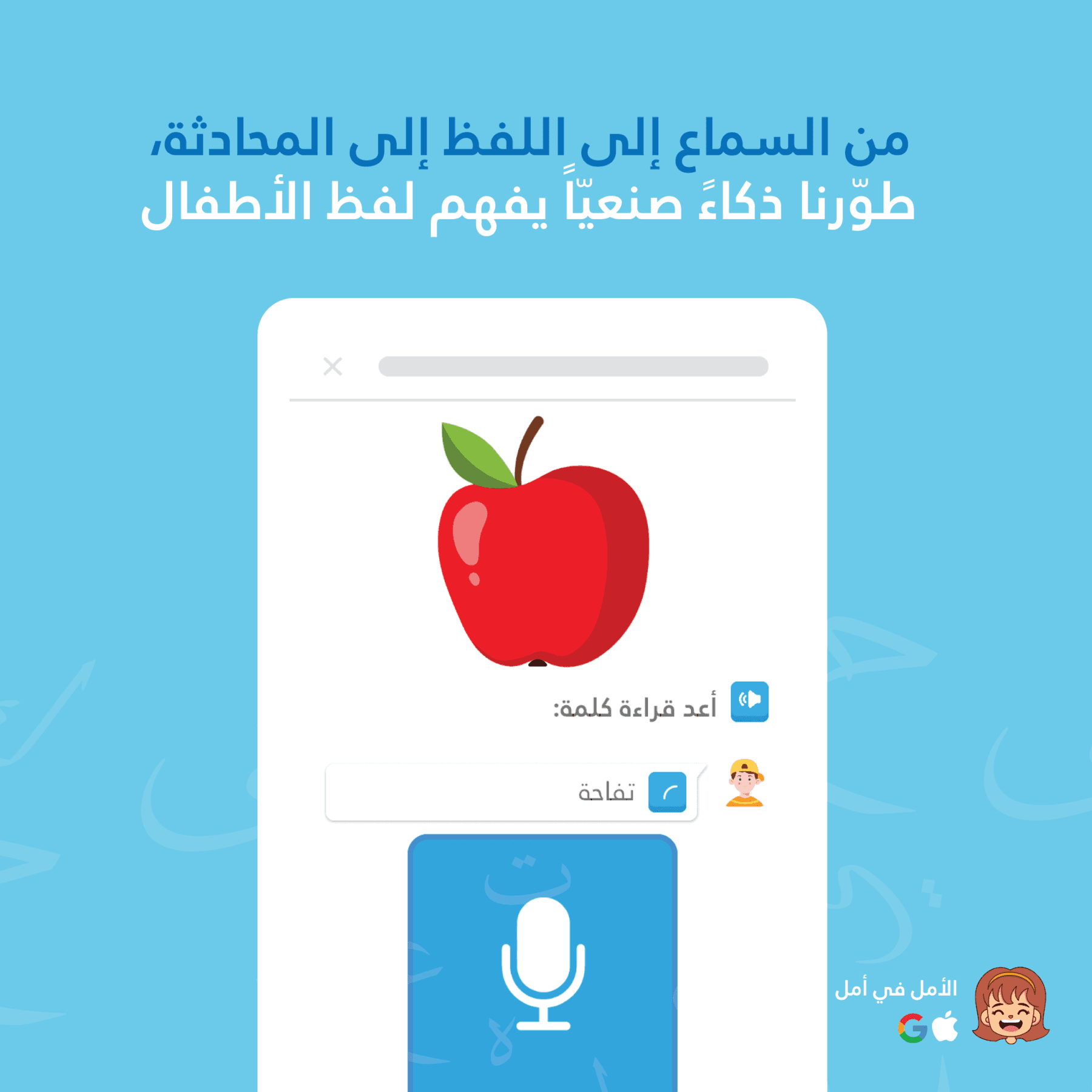
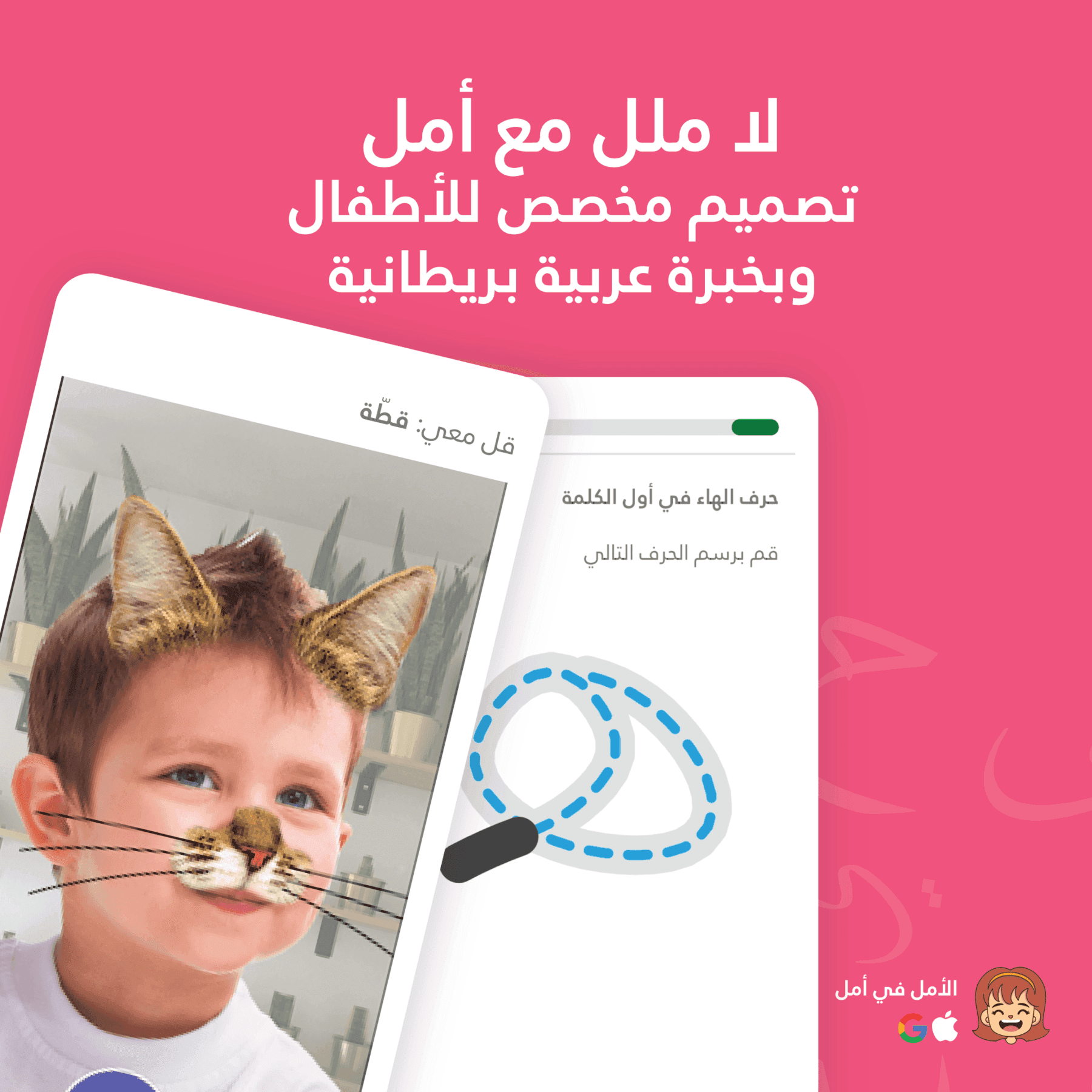
lip_sync,speak_out_loud - Examples: "Hear the sound. Repeat it." "What sound is this letter?"
- Goal: Letter-sound mapping mastery
Level 3: Apply (Use information in new situations)
- Exercise types:
word_build,sentence_building - Examples: "Build the word كتاب (book) from letters." "Complete the sentence: أنا _____"
- Goal: Productive use of letters to form words
Level 4: Analyze (Draw connections among ideas)
- Exercise types:
pair_matching,fill_in_blanks,open_question - Examples: "Match words with similar patterns." "What vowel is missing in كـتب?"
- Goal: Pattern recognition and critical thinking
Level 5: Evaluate (Justify a stand or decision)
- Exercise types:
word_translation,reading_comprehension - Examples: "Translate كتاب. Is it masculine or feminine?" "Read this story. What happens next?"
- Goal: Deep comprehension and linguistic analysis
Level 6: Create (Produce new or original work)
- Exercise types:
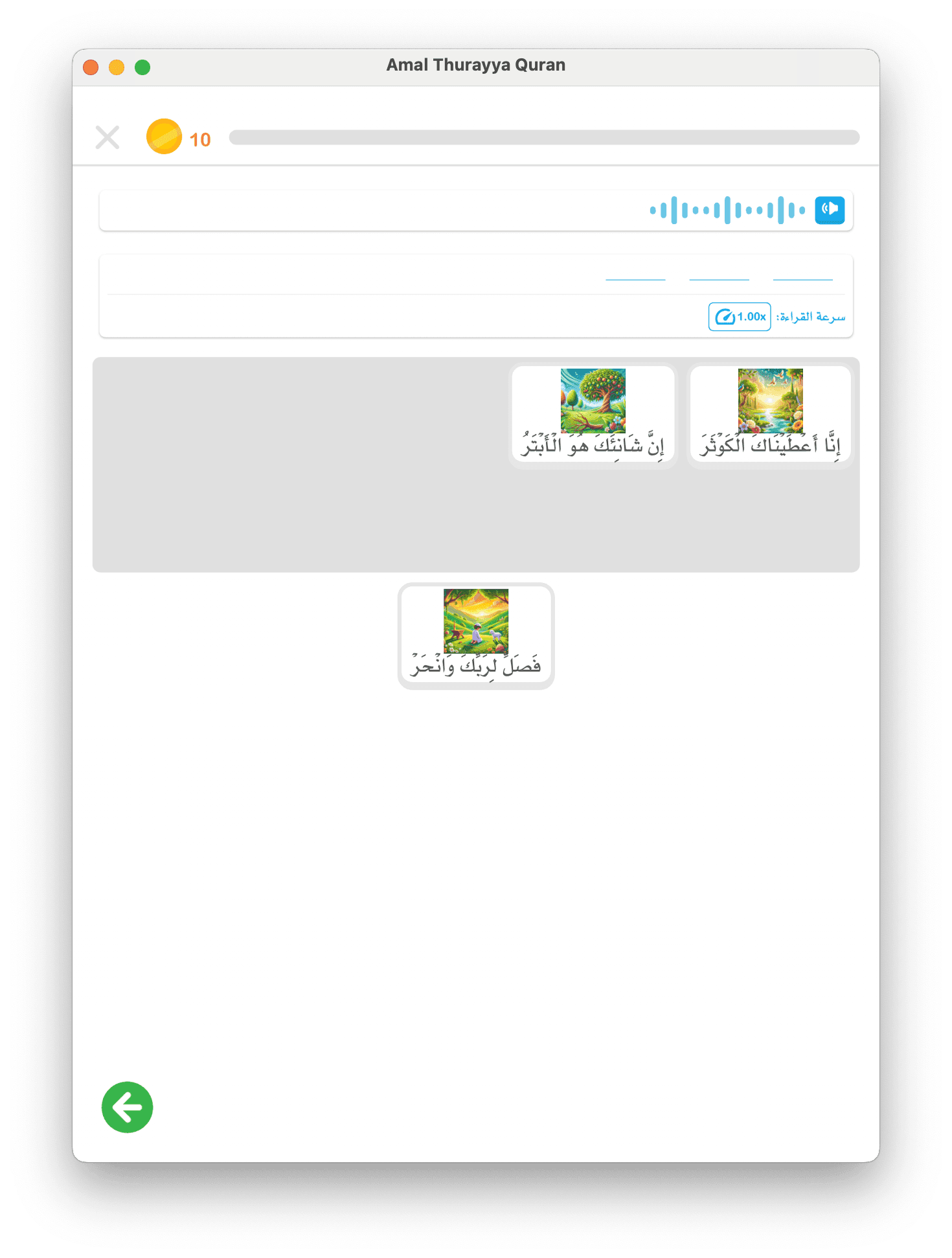
coloring_freeform,creature_building,creative_writing - Examples: "Design your character's creature." "Write a sentence using three new words."
- Goal: Original production and creative expression
| Bloom's Level | Exercise Type | Cognitive Skill | Time in Curriculum |
|---|---|---|---|
| Remember | Select, Flashcard | Recognition | 20% |
| Understand | Lip-Sync, Speak | Comprehension | 20% |
| Apply | Word Build, Sentence | Application | 25% |
| Analyze | Matching, Fill-In | Analysis | 20% |
| Evaluate | Translation, Reading | Evaluation | 10% |
| Create | Freeform, Writing | Creation | 5% |
100,000+ Educational Elements
Amal's content hierarchy:
Subject (6 total)
  ├── Letters
  ├── Reading
  ├── Writing
  ├── Pronunciation
  ├── Grammar
  └── Vocabulary
        ↓
Concept (200+)
  ├── Letter ب
  ├── Word كتاب
  ├── Noun-adjective agreement
  └── ...
        ↓
Content Byte (3,000+)
  ├── Letter ب: Lesson 1
  ├── Letter ب: Review Set
  ├── Letter ب: Challenge
  └── ...
        ↓
Content Bit (100,000+)
  ├── Select exercise: "Which is ب?"
  ├── Speak exercise: "Pronounce ب"
  ├── Game: "Bubble Pop (letter ب)"
  └── ...
Each content byte follows Bloom's progression: Remember → Understand → Apply → Analyze.
Why "Games With a Curriculum" Beats "Curriculum as a Game"
Duolingo Approach Gameify a flat exercise list:
- All lessons similar (multiple-choice → translation → typing)
- No progression depth
- Children reach a plateau quickly
- Focus: engagement metrics, not learning outcomes
Amal Approach Design curriculum first, then make engaging:
- Structured progression through Bloom's 6 levels
- Each level builds on previous mastery
- Children develop reading fluency, not just vocabulary
- Focus: measurable learning outcomes
The result: Children who reach Level 4+ in Amal can read independently — not just recognize words. They understand patterns, can infer meaning, and construct sentences. That's the difference between an app and a real education.
The Reading Fluency Timeline
Weeks 1-2 (Levels 1-2)
- Recognize 14 basic letters
- Pronounce letter sounds
- Beginning phonetic awareness
Weeks 3-6 (Levels 2-3)
- Connect letters into simple words
- Read 50+ basic vocabulary words
- Build short words from letters
Weeks 7-12 (Levels 3-4)
- Read sentences with context clues
- Recognize word patterns (feminine, plural, verb tenses)
- Comprehend simple stories
Weeks 13-24 (Levels 4-5)
- Read independently with diacritics
- Translate vocabulary in context
- Analyze text meaning
Weeks 25+ (Levels 5-6)
- Read without diacritics
- Write original sentences
- Create content in Arabic
FAQ
Q: My child is advanced. Will they skip levels? A: Partially. The system detects advanced learners and accelerates through Levels 1-2 quickly. But Level 3+ (apply, analyze) can't be skipped — deep comprehension requires building from prior levels.
Q: Why spend time on Level 1 (just remembering letters)? A: Automatic letter recognition is foundational. Without it, children cognitively overload on letters instead of processing meaning. Bloom's Taxonomy guides spending enough time here to make higher levels possible.
Q: When can my child read a real book? A: Level 5-6 readers can pick up beginner Arabic books. We recommend it around week 16-20, depending on individual pace. The parent dashboard shows when this milestone is approaching.