← Back to blog
3 min readAlphazed Team

Arabic Alphabet for Kids: The Complete Parent's Guide (2026)

Everything parents need to know about teaching the Arabic alphabet to children — the 28 letters, where to start, and which apps actually work.

Education

The Arabic alphabet has 28 letters, written right-to-left, with each letter having up to 4 different forms depending on its position in a word. For children learning Arabic — especially diaspora kids abroad — the best place to start is with individual letter recognition paired with sound-letter matching. The Amal app teaches all 28 letters with animated tracing, pronunciation, and interactive games.

The 28 Arabic Letters: A Quick Overview

Arabic letters are: أ ب ت ث ج ح خ د ذ ر ز س ش ص ض ط ظ ع غ ف ق ك ل م ن ه و ي. Unlike English, each letter has a distinct sound that does not change — making Arabic phonetically consistent once the sounds are learned.

The Four Forms of Arabic Letters

One of the biggest challenges in Arabic literacy is that most letters take 4 different shapes: isolated (alone), initial (start of word), medial (middle of word), and final (end of word). Children need to learn all four forms. The Amal app introduces each form progressively, starting with isolated forms before introducing connected forms in context.

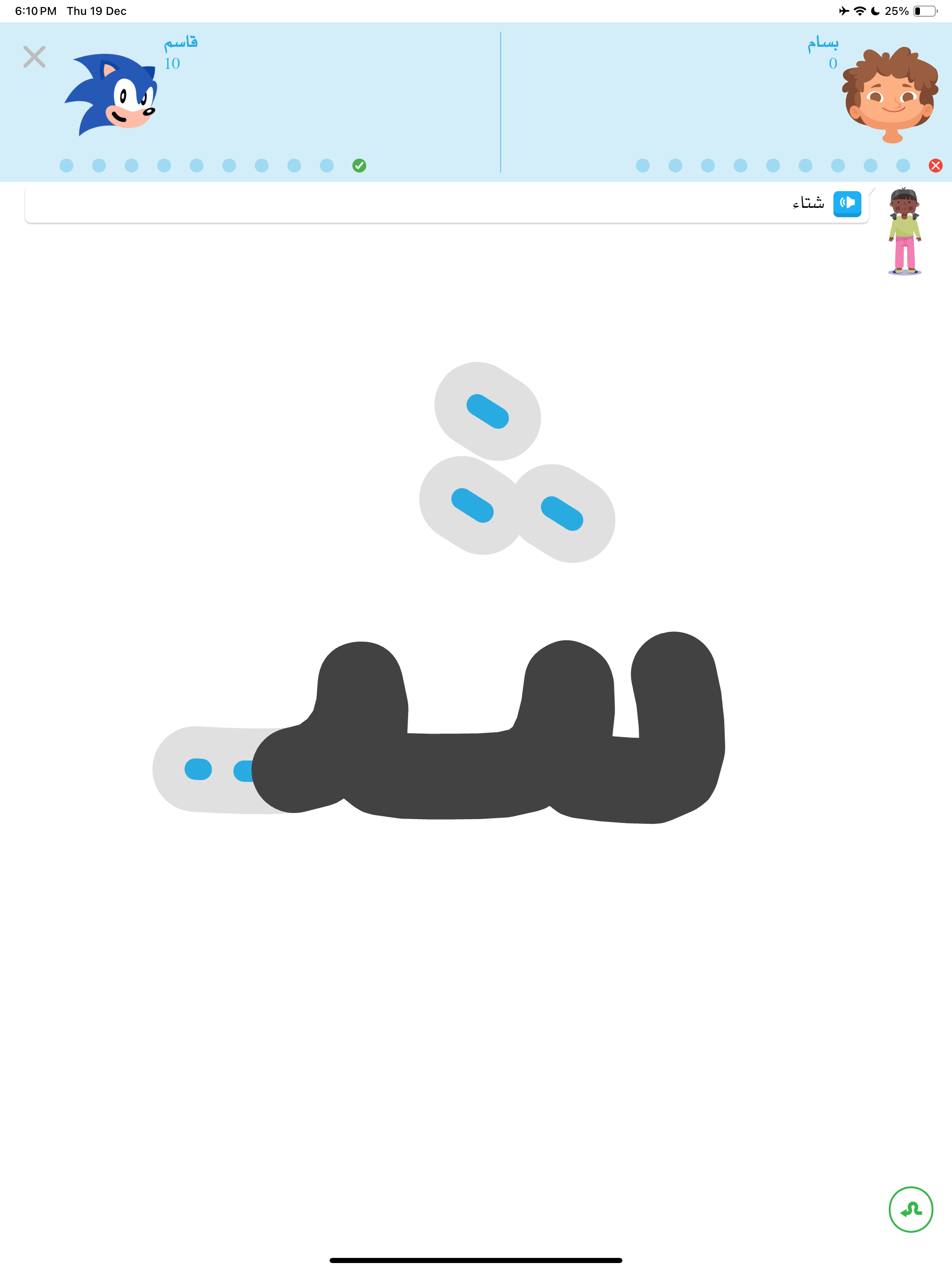
Arabic letter Sheen tracing exercise for kids in Amal app on iPad — animated stroke order guide for Arabic alphabet learning
Letter Sheen — All Four Forms
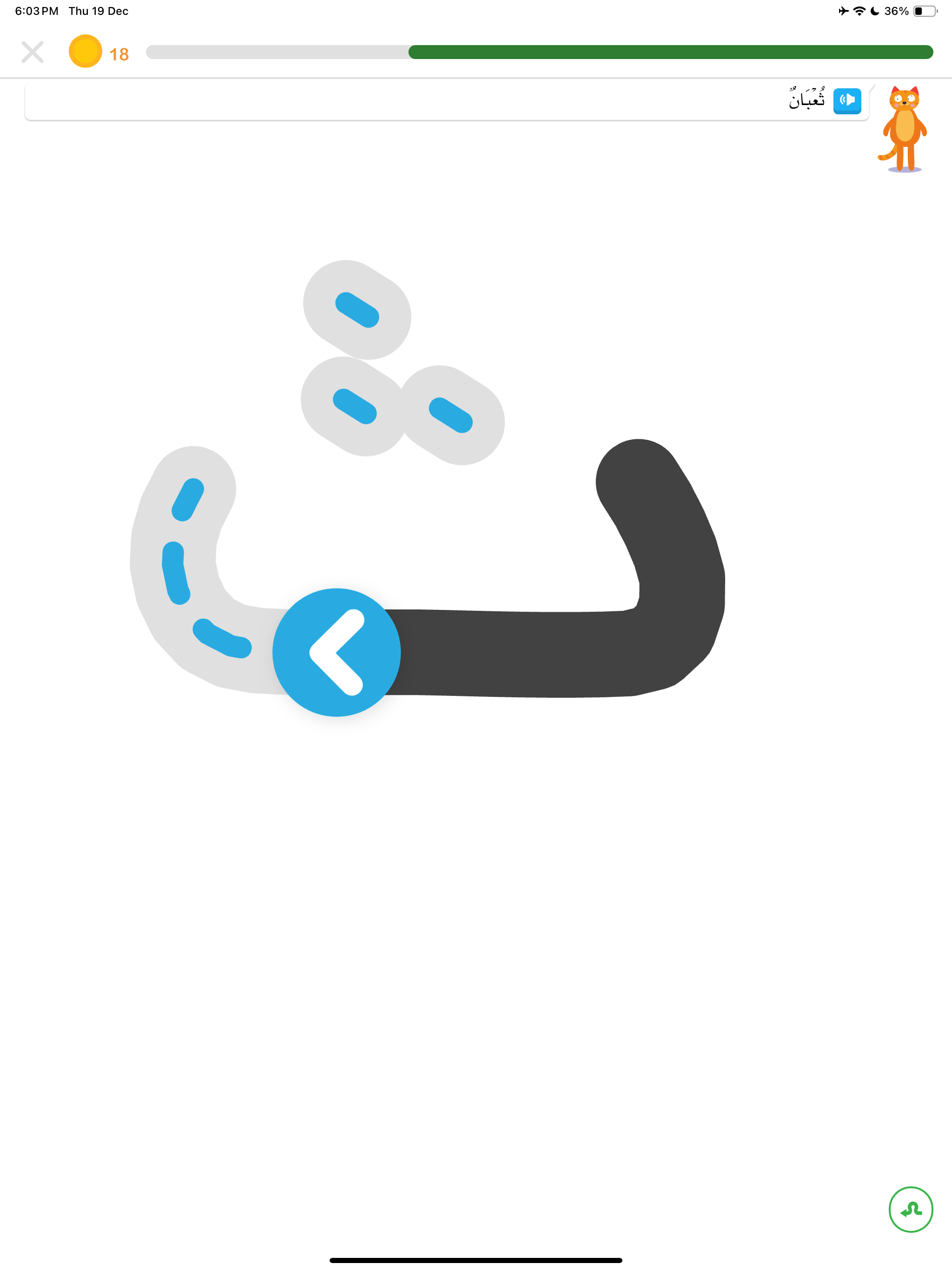
Arabic letter Tha tracing practice in Amal app on iPad — guided writing for children learning the Arabic alphabet
Letter Tha — Guided Writing

Best Age to Start Learning the Arabic Alphabet

Children can begin recognising Arabic letters as young as age 2-3 through exposure and play. Structured alphabet learning typically works best from age 4-5. By age 7-8, most children can read basic Arabic words with proper instruction. The Amal app has dedicated content for ages 3-6 (simplified, audio-first) and ages 6-15 (full reading, writing, grammar).

Tips for Teaching the Arabic Alphabet at Home

  • Start with familiar letters: teach letters that appear in your child's name first.
  • Use letter sounds, not names: focus on how each letter sounds, not its Arabic name.
  • Practice daily in short sessions: 10 minutes daily beats 1 hour weekly for alphabet retention.
  • Combine visual, audio, and writing: children who trace letters while hearing their sound retain them 3x faster.
  • Celebrate progress: every letter mastered is worth celebrating.

How Amal Teaches the Arabic Alphabet

In Amal, each letter is introduced through: (1) animated demonstration with native pronunciation audio, (2) interactive games to practice recognition, (3) guided tracing for handwriting, and (4) reading activities showing the letter in words and sentences. The AI tracks which letters your child has mastered and which need more practice.

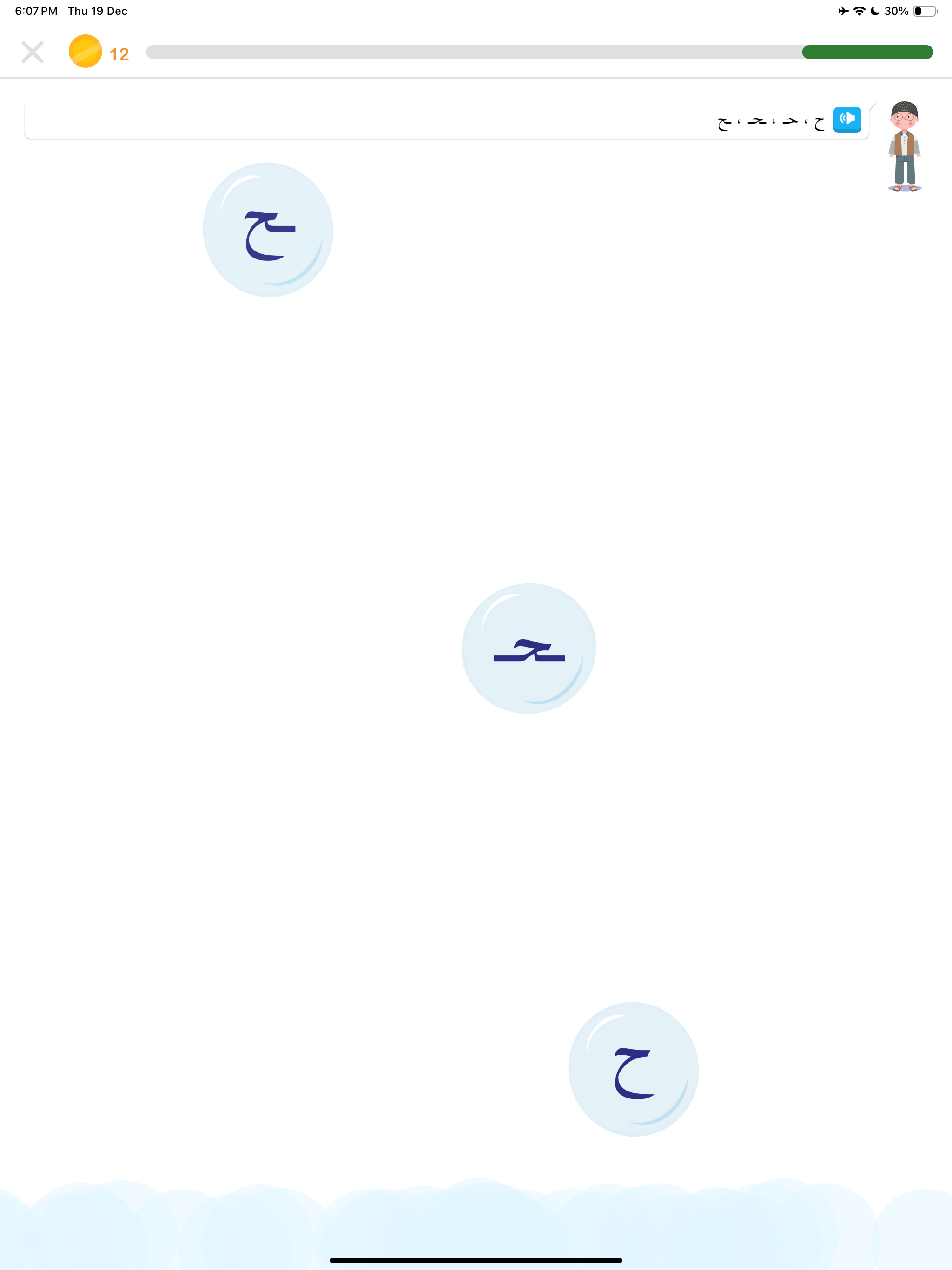
Arabic letter bubble pop game in Amal app on iPad — kids tap the correct Arabic letter to advance through the alphabet
Arabic Alphabet Game
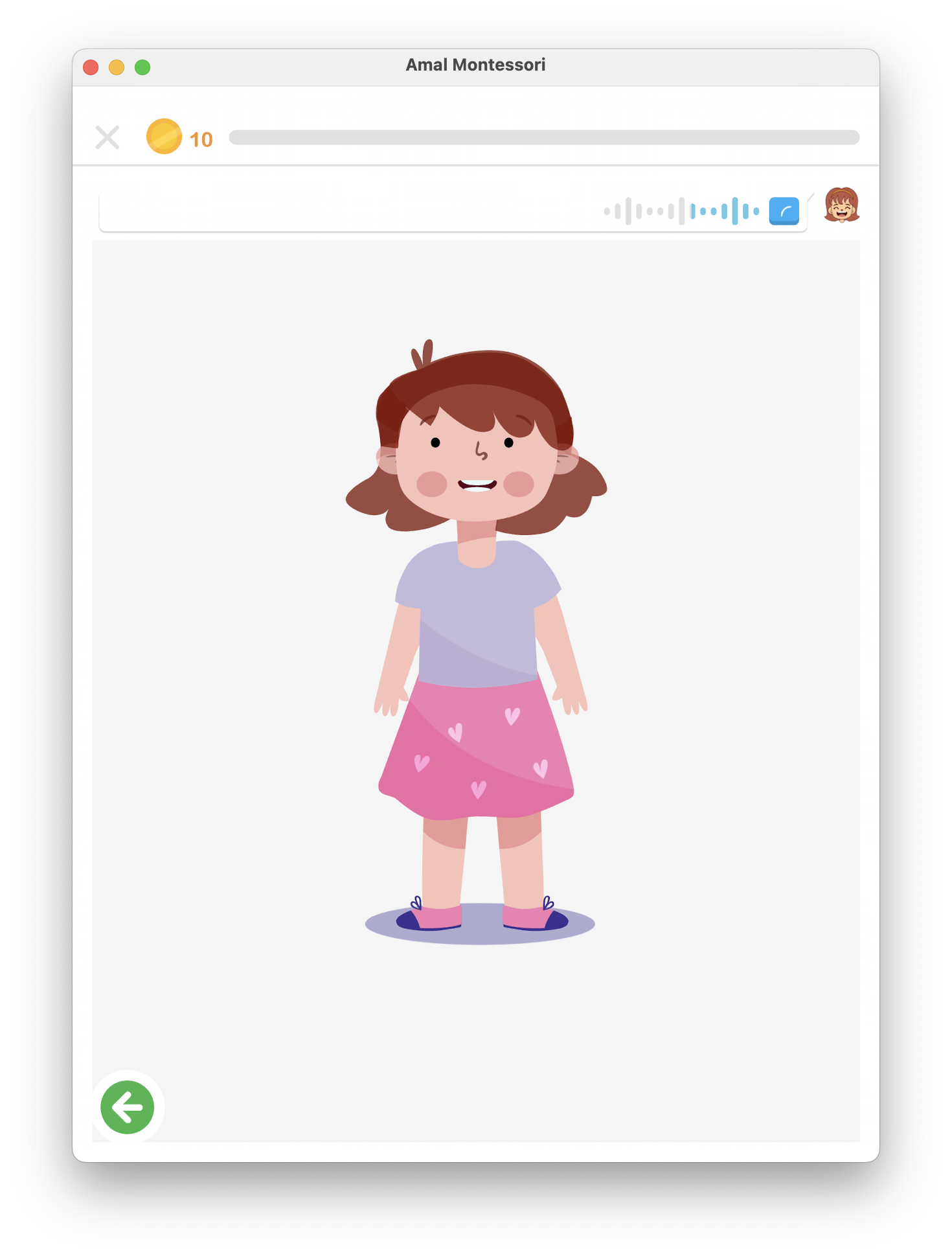
AI lip-sync character teaching Arabic pronunciation in Amal app on iPad — animated girl demonstrates correct mouth position for each Arabic letter
Arabic Letter Pronunciation

Frequently Asked Questions

How long does it take to learn the Arabic alphabet?

With consistent daily practice of 15-20 minutes, most children aged 5-7 can recognise all 28 letters within 3-6 months. Reading connected words takes longer — typically 6-12 months of regular practice.

Is Arabic alphabet hard for kids?

Arabic has a consistent sound-letter system, which makes it easier to decode than English. The challenges are the four letter forms and the right-to-left direction. Structured apps like Amal address these challenges systematically.

Should I teach Arabic letters or Quran recitation first?

Arabic letters first. Building a solid Arabic reading foundation makes Quran recitation significantly easier. Once your child can read Arabic, Thurayya provides AI-guided Quran recitation practice.

Related Articles

Arabic Alphabet for Kids: The Complete Parent's Guide (2026) | Alphazed